

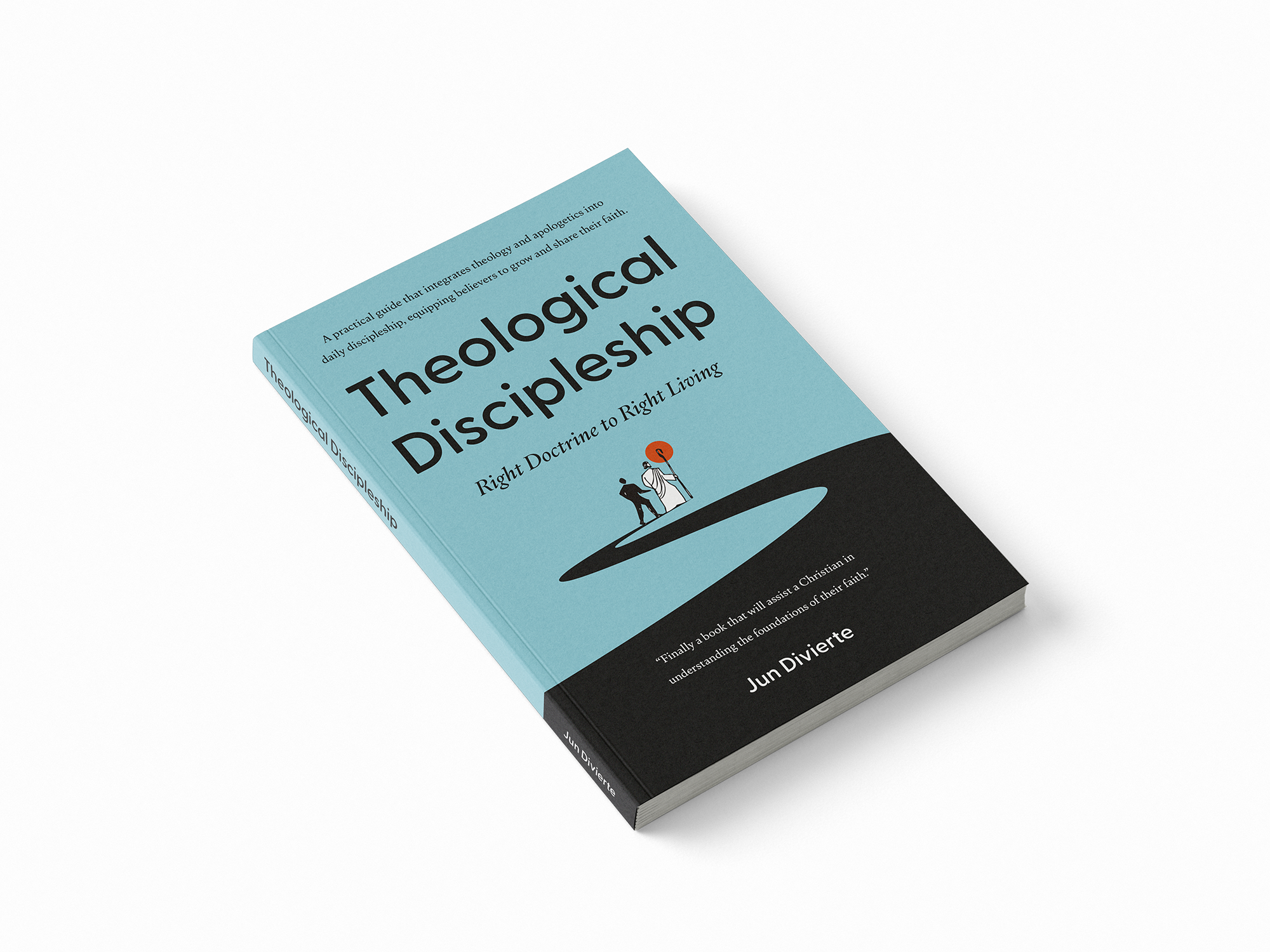
Theological Discipleship
Why Theological Discipleship?
Isn’t theology just for pastors and Christian academe? This is because theology is inescapable in the life of every disciple-making believer. To engage in discipleship is inevitably to engage in theology, for whenever we speak about God, life, values, or moral principles, we are expressing theological convictions, whether good or bad. Theological Discipleship calls us to be intentional about grounding our teaching, conversations, and witness in the faithful and accurate understanding of Scripture, ensuring that our theology shapes our relationship with Christ rather than undermines it. And as we grow in understanding the teachings of the Bible, we are changed and transformed day by day, impacting not just our schools and universities, but our barangay, city, nation, and even the world.
This book was not written from a specifically Filipino context, because Christian doctrine is never defined by nationality. Rather, it was written out of concern that many evangelical believers identify themselves as long-time Christians yet still cling to a works-based view of salvation due to an incorrect foundation received from those who discipled them. This issue is not limited to the Philippines but is found throughout the world. The topics included in the book address some of the most frequently misunderstood doctrines in the Christian faith. This is a no-holds-barred approach to addressing the often-confusing doctrines of salvation, lordship, and repentance.
During the era of the early church, catechism was never a matter of simplifying the message or withholding truth until believers reached a certain level of maturity. From the very beginning, the Church was intentional about grounding new converts in the core doctrines of the Christian faith. They understood that without a solid theological foundation, all subsequent training and spiritual formation would lack depth and stability. The period of catechesis often extended over two to three years, a reflection of their seriousness in carefully, patiently, and pastorally instructing believers in sound doctrine and integrating that truth into their daily lives.
In contrast, many Christians today are often tempted to hurry through the foundational stages of discipleship. Yet authentic discipleship cannot be rushed, for what is at stake is not merely the acquisition of knowledge, but the shaping of a life wholly centered upon the truth of Christ.
My book invites you to pause for a moment and take a closer look at some theological clichés and terms we’ve often accepted over the years—and then reexamine them in light of God’s Word. It also unpacks a proper understanding of the word “sin” in relation to salvation, the correct use of the word “convict,” and the true meaning of “repentance,” showing how it relates to both justification and sanctification. It also warns against the dangers of easy believism and hypergrace, and explains why we shouldn’t be dogmatic about non-essential doctrines. It reminds us to love the Lord wholeheartedly and obey His commands, not out of legalism, but out of a genuine relationship with Him. You’ll discover insights on why women can preach and teach, along with several real-life conversations I’ve had with different believers about the foundations of faith.
Each chapter includes reflection questions to help you engage with the material, plus a section for your own study notes in case you want to jot down key takeaways. And there’s more—you’ll also find many other topics that will help you grow in your faith and discipleship journey. The exciting part? At the end of the book, you’ll find a Doctrinal Evaluation Examination, where you can check your answers using a QR code!
Theological Discipleship underscores the vital role of theology in the process of making disciples. It seeks to nurture believers and instruct unbelievers by clearly articulating the essential truths of the Christian faith. Many Christians today find themselves uncertain about the foundational doctrines of Christianity or struggle to explain them accurately without distorting the true meaning of God’s Word. Moreover, some believers tend to dismiss theology, preferring instead to emphasize a “relationship with Jesus.” Yet, in doing so, they often elevate personal experience at the expense of sound doctrine.
The truth, however, is that theology is inescapable in the life of every disciple. To engage in discipleship is inevitably to engage in theology, for whenever we speak about God, life, values, or moral principles, we are expressing theological convictions, whether good or bad. Thus, Theological Discipleship calls us to be intentional about grounding our teaching, conversations, and witness in the faithful and accurate understanding of Scripture, ensuring that our theology shapes our relationship with Christ rather than undermines it.
Theological Discipleship was born out of this same concern, to address the growing tendency among believers to engage in discipleship while inadvertently misrepresenting the soundness of the Christian faith. While it is true that salvation does not depend upon mastering every fine point of theology, it remains crucial that we rightly understand and faithfully proclaim the truth about Jesus Christ and His teaching concerning salvation. This is the task we desire believers to embrace: to explain, with clarity and conviction, the essentials of the gospel.
Though Christians may differ in their theological perspectives on the order of salvation, every orthodox denomination affirms that salvation is by grace through faith alone. It is here that Theological Discipleship finds its purpose, helping believers understand doctrines such as Salvation, Lordship, Repentance, Baptism, Devotion, the Church, and Discipleship through a biblically faithful lens, while also correcting traditional misconceptions and refuting theological errors.
In the early church, theological instruction and apologetic grounding were inseparable from spiritual growth. This formation was not reserved for the “advanced” or the “mature,” but was given to all who came to faith, equipping them to know what they believed, why they believed it, and how to defend it amidst a world of conflicting ideologies.
We must therefore guard the unshakable core of our confession, the identity of Jesus Christ as the God-Man and the truth of His saving work. This is the heart of our faith, the foundation upon which everything else stands.
According to the grace of God given to me, like a skilled master builder I laid a foundation, and someone else is building upon it. Let each one take care how he builds upon it. For no one can lay a foundation other than that which is laid, which is Jesus Christ.
1 Corinthians 3:10-11
Watch your life and doctrine closely. Persevere in them, because if you do, you will save both yourself and your hearers.
1 Timothy 4:16
Comments
You must be logged in to view and post comments.

Do You Want To Learn Or Have A Question In Mind?
To send us your questions, please fill out the required form by clicking the button below. We'll do our best to get back to you as soon as possible.
Let's Talk